7 Best Ways Altitude Affects Dry Type Transformer Cooling?

Time:2026-10-28 Author:Sophia
0%

How does altitude affect the cooling of dry type transformers? The answer begins with air density. As elevation rises, air becomes thinner. Less air passes across the transformer’s windings and core during natural or forced convection. Cooling becomes less effective. Temperature may rise, even when the electrical load remains unchanged.

This matters in mountain substations, high-rise facilities, mines, and remote renewable-energy projects. A transformer installed at 2,500 meters faces different thermal conditions than one operating near sea level. Fans may move air, but reduced density also lowers their cooling performance. Heat transfer surfaces, ventilation openings, enclosure design, and ambient temperature must be reviewed together. Small design assumptions can create large thermal consequences.

Transformer engineer and author John J. Winders Jr. emphasized the importance of understanding transformer operating behavior rather than relying on labels alone. His practical message can be expressed through the engineering principle, “If you cannot measure it, you cannot improve it,” often attributed to Lord Kelvin. That principle fits altitude assessment well. Measure winding temperature, intake air, airflow, load profile, and local elevation. Then compare the results with the manufacturer’s correction data and applicable standards.

The seven cooling effects discussed in this guide provide a practical starting point. They cover reduced air density, weaker convection, fan derating, higher hot-spot temperatures, enclosure restrictions, insulation stress, and required capacity adjustments. Yet no single altitude rule fits every installation. Real sites are messier. Dust, sunlight, blocked vents, and unexpected load cycles can change the outcome. Careful verification remains essential before finalizing a dry type transformer cooling design.
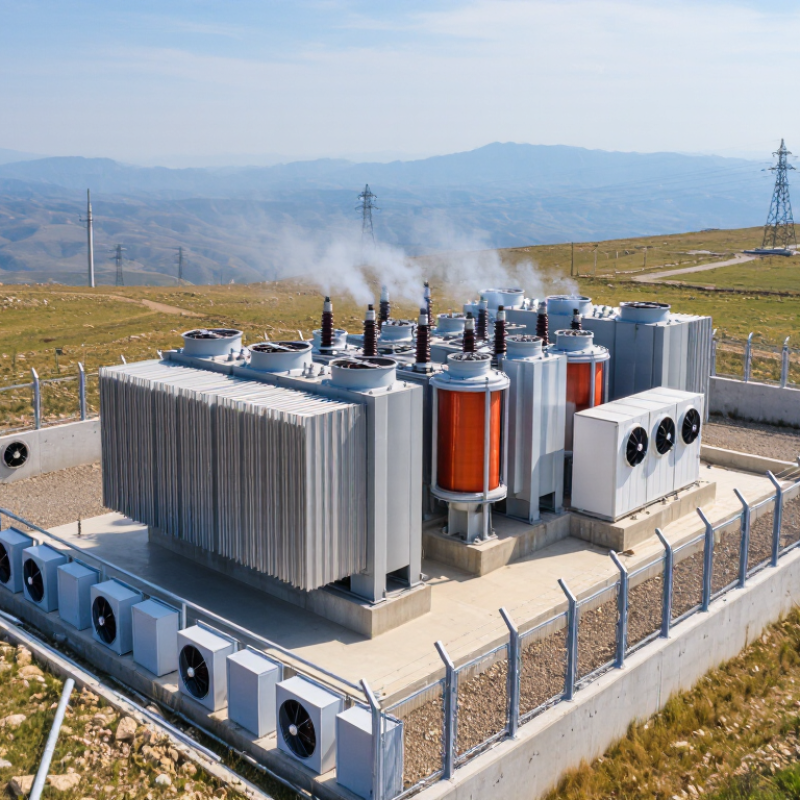
7 Best Ways Altitude Affects Dry Type Transformer Cooling?

What Dry-Type Transformer Cooling Depends on at Different Altitudes

7 Best Ways Altitude Affects Dry Type Transformer Cooling

What Dry-Type Transformer Cooling Depends on at Different Altitudes

Dry-type transformer cooling depends heavily on air density, ambient temperature, load, and enclosure design. At sea level, standard air density is about 1.225 kg/m³. At 3,000 meters, it falls to roughly 0.909 kg/m³, according to the International Standard Atmosphere data used by NOAA and aviation authorities. Less dense air removes heat less effectively from coils and cores.

IEC 60076-11 identifies 1,000 meters as a common reference altitude for transformer service conditions. Above this level, engineers should verify temperature-rise limits and derating requirements with the manufacturer. IEEE C57.12.01 also treats altitude as a key installation condition. A fixed “percentage per 100 meters” rule can help during early planning, but it is not enough. Cooling performance also changes with room temperature, ventilation path, harmonic loading, and enclosure openings. A transformer at 2,500 meters may run hotter than expected when installed in a tight electrical room.

Tips: Check site altitude, maximum ambient temperature, and daily load cycles together. Use temperature sensors near the hottest winding zones. Forced-air cooling can improve heat transfer, but fans also lose performance in thin air. Leave space around ventilation openings. A conservative design may still fail if dust blocks the airflow path, which is an easy detail to overlook. Recheck the design after installation, especially when measured temperatures differ from calculations.

How Thinner Air Reduces Heat Transfer from the Transformer

7 Best Ways Altitude Affects Dry Type Transformer Cooling

How Thinner Air Reduces Heat Transfer from the Transformer

At higher elevations, air becomes thinner and carries less mass through the transformer. Natural convection then removes heat less effectively from windings, cores, and enclosure surfaces. The same transformer may show a higher temperature rise than it does at sea level. Heat gathers around tight winding channels first. Small hot spots can become important.

Altitude affects cooling in several connected ways. It reduces air density, weakens natural airflow, lowers fan mass flow, and increases the need for derating. It can also make enclosure ventilation less effective, especially when filters restrict already limited airflow. Internal temperature sensors may record gradual increases during heavy loading. Engineers often respond with larger ventilation paths, improved fan selection, stronger thermal monitoring, or reduced operating current. A wider cooling channel can help, but it may also change the transformer’s dimensions and acoustic behavior.

Design calculations should use the actual installation altitude, ambient temperature, enclosure type, and duty cycle. A fan rated by volume alone may look adequate, yet deliver insufficient cooling mass at elevation. This is an easy mistake. Field checks should compare winding temperature, air inlet temperature, outlet temperature, and load current during realistic operation. Published correction factors are useful, but they should not replace project-specific thermal review. In my view, conservative assumptions are safer, though excessive derating can waste capacity and increase costs.

7 Best Ways Altitude Affects Dry Type Transformer Cooling? - How Thinner Air Reduces Heat Transfer from the Transformer

No. Altitude-Related Effect Representative Data or Relationship Impact on Dry-Type Transformer Cooling Recommended Engineering Response
1 Lower air density Standard-atmosphere air density decreases from approximately 1.225 kg/m³ at sea level to:
• 1.112 kg/m³ at 1,000 m
• 1.006 kg/m³ at 2,000 m
• 0.909 kg/m³ at 3,000 m
• 0.736 kg/m³ at 5,000 m
Each cubic metre of cooling air carries less mass and therefore removes less heat at the same temperature rise and volumetric airflow. Apply the project altitude during thermal design. Do not assume a sea-level continuous rating remains valid at high elevation.
2 Reduced convective heat transfer For forced airflow, heat removal can be expressed as Q̇ ≈ ṁ × cp × ΔT, where mass flow ṁ = ρ × V̇. At the same fan volume flow, the available air mass flow is approximately proportional to air density. Lower density generally reduces the heat carried away by air and may increase winding and core temperatures. Use altitude-adjusted thermal calculations and verify the allowable temperature rise with the transformer manufacturer or design standard.
3 Weaker natural convection Natural-convection circulation is driven by buoyancy. Buoyant force depends on air density difference and gravity; thinner air reduces the mass of air moved through the cooling paths. Self-cooled dry-type transformers may experience lower airflow over windings, ducts, and enclosure surfaces, especially when ventilation paths are restrictive. Provide larger or better-positioned ventilation openings, maintain unobstructed vertical air paths, and avoid installing the transformer in a tightly sealed enclosure without thermal analysis.
4 Reduced fan mass-flow capability A fan may deliver a similar volumetric flow rate, but the corresponding mass flow decreases with air density. At 3,000 m, standard-atmosphere density is about 74% of the sea-level value; at 5,000 m, it is about 60%. Air-forced cooling may remove less heat than expected if the fan selection is based only on sea-level volume flow. Select fans using altitude-specific performance curves, pressure capability, motor derating data, and the complete system resistance—not only the nominal fan rating.
5 Higher winding and core temperature Transformer losses are converted into heat. If cooling effectiveness decreases while load losses remain unchanged, the temperature rise increases until a new thermal balance is reached. Higher hot-spot temperatures can accelerate insulation ageing and may reduce the practical continuous loading capability. Check the winding hot-spot, average winding temperature rise, and enclosure temperature against the applicable temperature limits.
6 Lower breakdown strength of air Air insulation withstand capability generally decreases as air pressure decreases. The exact withstand level depends on electrode geometry, gap length, humidity, impulse shape, and surface condition. In addition to cooling concerns, reduced air density can decrease clearances and creepage performance for exposed or air-insulated parts. Review altitude corrections for dielectric withstand, clearance, creepage distance, partial discharge, and terminal insulation. Use sealed or specially designed insulation systems where required.
7 Greater sensitivity to enclosure and ambient conditions Cooling depends on air density, ambient temperature, solar gain, enclosure heat dissipation, ventilation resistance, dust loading, and fan condition. A high ambient temperature further reduces the available temperature margin. Poorly ventilated rooms or enclosures can compound the altitude effect and cause thermal alarms or load restrictions. Perform a complete room or enclosure heat-balance study, provide temperature monitoring, keep filters and ducts clean, and coordinate alarms with the operating load plan.
Engineering note: The air-density values above are approximate International Standard Atmosphere values for dry air. They are useful for preliminary comparison only. Actual transformer loading, altitude derating, fan selection, insulation coordination, and temperature-rise limits must be confirmed using the applicable transformer standard, site conditions, enclosure design, and the equipment manufacturer's certified data.

Why High Altitude Raises Winding and Core Operating Temperatures

7 Best Ways Altitude Affects Dry Type Transformer Cooling

At elevation, air becomes thinner. That small physical change has a major thermal effect. Dry-type transformers depend on surrounding air to remove heat from windings and the core. With lower air density, natural convection weakens, while cooling fans may move less mass. Heat can remain around copper conductors and magnetic steel for longer periods. Winding temperature may rise beyond the design assumption, especially during continuous heavy loading. Insulation then ages faster. The core may also operate hotter, increasing losses and creating additional thermal stress.

Field experience shows that altitude should be reviewed with ambient temperature, enclosure design, load pattern, and cooling mode. A cool mountain night does not remove daytime thermal risk. Engineers commonly apply altitude correction factors, reduce allowable loading, improve ventilation, or select forced-air cooling. Adequate space around the transformer matters. Blocked openings can defeat an otherwise sound design. Temperature sensors should be placed where winding hot spots are likely, not only near the room ceiling. This is where many practical assessments become imperfect: calculated values may look safe, yet dust, fan wear, or uneven airflow can change the result.

Tips: Confirm the installation altitude. Check the actual load cycle. Keep air paths clean and open. Review temperature readings during the hottest operating period. Do not rely on one short test.

How Altitude Changes Cooling Capacity and Temperature Rise

Altitude changes dry-type transformer cooling mainly by reducing air density. Under the ISO 2533 standard atmosphere, air density falls from about 1.225 kg/m³ at sea level to approximately 0.909 kg/m³ at 3,000 meters. Natural convection then moves less heat across the windings and enclosure. The transformer may carry the same electrical losses, but its temperature rise increases.

IEC 60076-11 and IEEE C57.12.01 use approximately 1,000 meters as a reference altitude for standard transformer conditions. Above that level, engineers should check airflow, insulation clearances, and allowable loading. Forced-air cooling can help, but fans cannot fully replace the heat-transfer capacity lost in thin air.

A 1,500 kVA unit rated at sea level may therefore need derating, redesign, or additional ventilation at high elevation.

Temperature rise is the practical warning sign. A hotter winding accelerates insulation aging and may shorten service life. The exact increase depends on enclosure design, losses, ambient temperature, and installation airflow. A simple percentage rule can be useful, but it is not universally reliable.

I have seen altitude calculations treated as paperwork, while blocked louvers quietly caused higher temperatures. Site testing and thermal modeling remain important, especially around 2,000 meters and above. Sources: IEC 60076-11, IEEE C57.12.01, and ISO 2533.

Design and Operating Methods for Reliable High-Altitude Cooling

At high altitude, thinner air removes less heat from dry type transformer surfaces. Every design review should start with site elevation, ambient temperature, load profile, and enclosure type. Apply the altitude correction before selecting kVA. A transformer that runs comfortably at sea level may exceed its insulation temperature limit above 2,000 meters. Small errors matter.

Increase cooling surface area where practical, and keep airflow paths short and unobstructed. Use properly sized fans when natural cooling cannot maintain the permitted temperature rise. Fan controls should respond to winding temperature, not only room temperature. Provide generous room clearances, low-resistance intake openings, and separate exhaust paths. Dust screens need inspection. They can quietly restrict airflow. Measure actual airflow during commissioning, because a running fan does not prove effective cooling.

Reduce continuous loading during hot afternoons or poor ventilation conditions. Install winding sensors, alarm stages, and independent overtemperature trips with tested settings. Inspect terminals, ducts, and fan bearings during scheduled maintenance. Record temperatures at comparable loads and elevations. This history reveals gradual cooling loss. I have seen calculations pass while site airflow failed. Recheck assumptions after installation. Weather, dust, and blocked louvers can change the thermal picture quickly. Reliable high-altitude operation requires design margins, disciplined commissioning, and operators willing to question normal readings.

FAQS

Why does altitude affect dry-type transformer cooling?

Higher altitude means thinner air. Thin air removes less heat from windings and the core.

How much can air density change with elevation?

Air density is about 1.225 kg/m³ at sea level. At 3,000 meters, it falls near 0.909 kg/m³.

What happens to winding temperature at high altitude?

Winding temperature can rise during continuous heavy loading. Hotter windings accelerate insulation aging.

Does forced-air cooling solve the altitude problem?

It can improve heat transfer. However, fans also move less air mass in thin air. They are not a complete solution.

Which factors should engineers check together?

Check altitude, maximum ambient temperature, load cycles, enclosure openings, and ventilation paths. One factor alone can mislead.

What installation details help maintain cooling performance?

Leave clear space around ventilation openings. Keep louvers clean. Dust can quietly block airflow.

How should temperature monitoring be performed?

Place sensors near likely winding hot spots, not only near the ceiling. Check readings during the hottest operating period.

Is a fixed altitude derating percentage always reliable?

No. A percentage rule helps early planning, but enclosure design and airflow can change the result. Calculations can look safe, yet field conditions may disagree.

Conclusion

Altitude has a significant effect on dry-type transformer cooling because air density decreases as elevation increases. The thinner air carries away less heat through natural convection and reduces the effectiveness of air circulation around the core and windings. As a result, the transformer may operate at higher winding and core temperatures, experience a greater temperature rise, and have less available cooling capacity under the same electrical load. Understanding how does altitude affect the cooling of dry type transformers is essential when selecting equipment and planning installation conditions.

Reliable high-altitude operation requires careful thermal design and practical operating methods. Engineers may need to apply altitude correction factors, reduce the transformer’s load, improve ventilation, use forced-air cooling, or provide a larger cooling surface to compensate for reduced heat transfer. Maintaining clear airflow paths, monitoring temperature continuously, and considering local ambient conditions can further improve safety and service life. Proper altitude evaluation helps ensure stable performance, efficient heat dissipation, and dependable transformer operation.

Sophia

Sophia

Sophia is a dedicated marketing professional with an exceptional depth of knowledge about her company's products and services. With a keen understanding of market trends and customer needs, she crafts insightful blog posts that not only inform but also engage readers, enriching the company’s online......